When Looking Better Never Feels Good Enough: The Social Media Pressure Facing Modern Men
When Looking Better Never Feels Good Enough: The Social Media Pressure Facing Modern Men
Open almost any social media app today and you'll see an endless stream of seemingly perfect men. They appear leaner, more muscular, more successful, and more confident than ever. While these images may seem harmless, they can have a real impact on how men view themselves.
Many people are familiar with the conversation around body image and social media among women and girls. What receives less attention is the growing pressure many men feel to meet increasingly unrealistic standards of appearance, fitness, and masculinity.
The truth is that social media has changed what many men believe they should look like, and it may be affecting mental health more than we realize.
The male body ideal is changing
Over the past decade, the image of the "ideal man" has become increasingly difficult to achieve.
The goalposts have moved. In the late 1990s, many men aspired to look like Brad Pitt in Fight Club, lean, athletic, and relatively attainable. Today, social media often promotes superhero physiques closer to Henry Cavill in Superman, larger, leaner, and significantly more difficult to achieve.
Social media now gives men constant exposure to physiques, lifestyles, and appearance advice that are often unrealistic or unsupported by science. Alongside fitness content, men are regularly exposed to discussions about testosterone, peptides, weight loss medications, cosmetic procedures, "looksmaxxing," jaw training, and other trends that promise dramatic transformations.
The challenge is that anyone can present themselves as an expert online. While some creators share evidence-based information, others promote misinformation or unrealistic expectations. Over time, these messages can create the impression that everyone is optimizing their appearance, making it easy to feel like you're falling behind.
It's about more than muscles
Body image concerns in men are often oversimplified as wanting bigger muscles. In reality, many men feel pressure in several areas at once.
Social media can create the expectation that men should be:
- Muscular and lean
- Financially successful
- Confident in every situation
- Attractive and youthful
- Emotionally strong at all times
The message can become clear: if you're not all of these things, you're somehow not enough.
Over time, this type of comparison can contribute to anxiety, low self-esteem, unhealthy exercise habits, and feelings of inadequacy, which men are less likely to address appropriately.
Even when you know better, it's easy to compare
As a healthcare provider, I spend a great deal of time discussing health, wellness, and realistic expectations with patients. I understand how social media works, and I know many images are carefully curated. But despite understanding the science behind body image and social media, I still catch myself comparing.
The scene may look familiar:
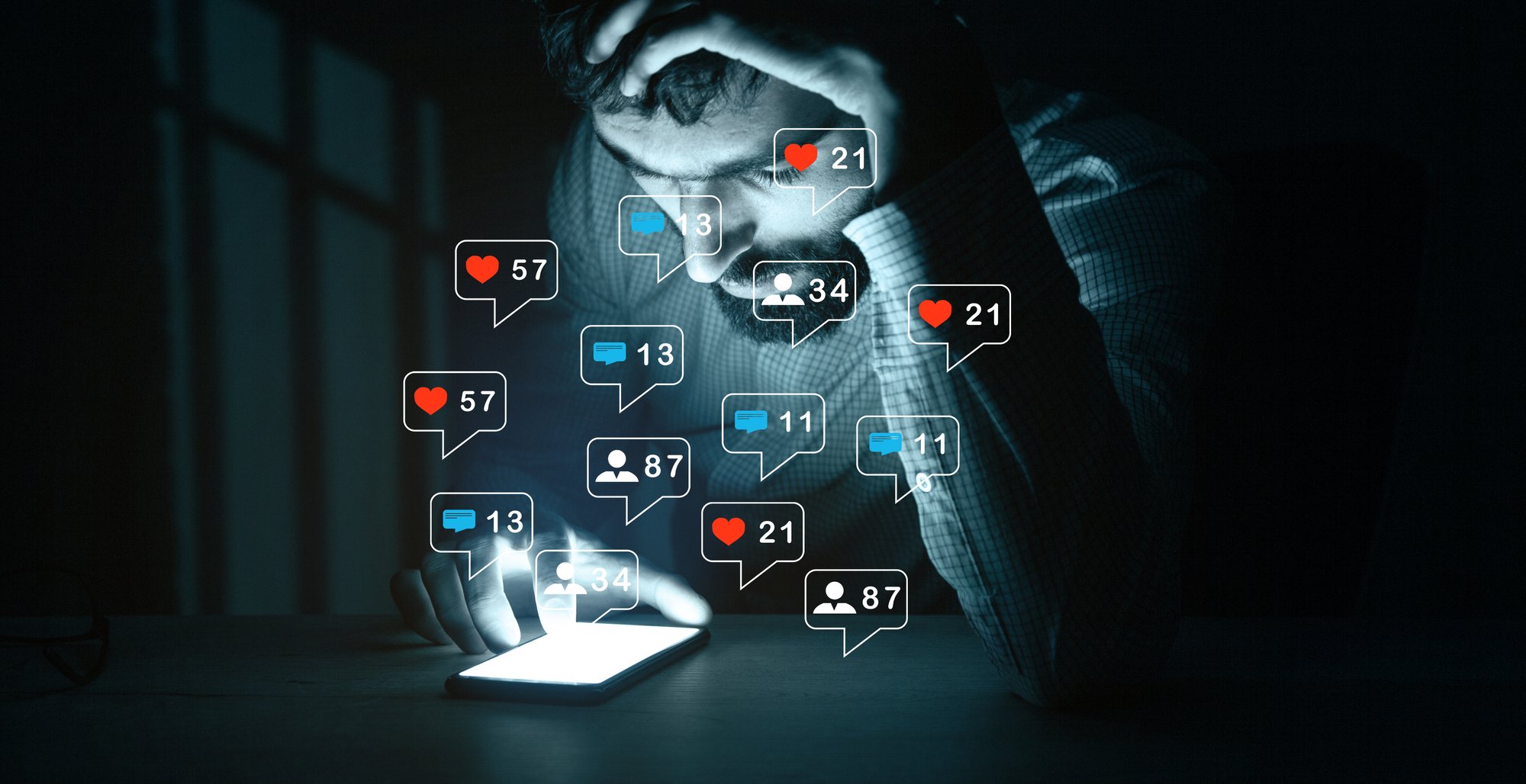
It's 11 PM. You're tired, you should be asleep, but you're scrolling. A reel shows a guy your age with visible abs, a six-figure side business, and a jawline that looks engineered. You know it's curated. You know the lighting is deliberate, the angles are chosen, and the lifestyle is a highlight reel. You still feel worse. You lock your phone, stare at the ceiling, and wonder why knowing better doesn't make you feel better.
That moment isn't a weakness. It's being human in a world designed to make you feel like you're not enough. And being human means comparing ourselves from time to time.
There are days when I wonder whether I'm muscular enough, handsome enough, or masculine enough. Despite understanding the science behind body image and social media, I am not immune to the same thoughts as many of my patients’ experience.
What I've learned is that awareness alone doesn't completely protect us from comparison but growth and self-acceptance can exist at the same time.
I can have goals for my health and fitness while still appreciating who I am today. I can work toward becoming stronger while recognizing that my worth is not determined by my appearance.
Most importantly, I try to find gratitude in the simple fact that I am here. My body has carried me through challenges, relationships, adventures, and experiences that matter far more than achieving a perfect physique.
Building a healthier relationship with social media
If social media is negatively affecting how you feel about yourself, consider a few simple strategies:
- Pay attention to how certain accounts make you feel
- Unfollow content that consistently leaves you discouraged
- Follow creators who promote realistic and diverse representations of men
- Focus on healthy habits instead of appearance alone
- Take breaks from social media when needed
- Remind yourself that social media shows highlights, not reality
Most importantly, speak to yourself with the same compassion you would offer a friend.
When to seek support
If concerns about your appearance are affecting your mood, relationships, eating habits, exercise behaviors, or daily life, consider speaking with a healthcare provider or mental health professional.
Body image concerns are common, and they are not a sign of weakness. Seeking support is a sign of self-awareness and strength.
Having goals is healthy. Wanting to become stronger, fitter, or more confident is normal. But you don't have to wait until you reach some future version of yourself to appreciate who you are today.
You are already enough: not when you hit a goal weight, not when the algorithm validates you, not when you finally look like the version of yourself you've been chasing. Right now. Reading this. You are already more than your appearance, your follower count, or a highlight reel.
About the Author
Spencer Rizk, DNP, FNP-C, is a Virtual Medical Director at Amazon One Medical with clinical expertise in primary care, men's health, weight management, and LGBTQIA+ healthcare. He is passionate about helping patients build healthier relationships with their bodies through evidence-based care, empathy, and realistic expectations.
The One Medical blog is published by One Medical, a national, modern primary care practice pairing 24/7 virtual care services with inviting and convenient in-person care at over 100 locations across the U.S. One Medical is on a mission to transform health care for all through a human-centered, technology-powered approach to caring for people at every stage of life.
Any general advice posted on our blog, website, or app is for informational purposes only and is not intended to replace or substitute for any medical or other advice. 1Life Healthcare, Inc. and the One Medical entities make no representations or warranties and expressly disclaim any and all liability concerning any treatment, action by, or effect on any person following the general information offered or provided within or through the blog, website, or app. If you have specific concerns or a situation arises in which you require medical advice, you should consult with an appropriately trained and qualified medical services provider.